Future of Work and Mobility
A More Structured Approach to Vehicle Care
Time is tighter. Schedules are more dynamic. Expectations around efficiency are higher.
Vehicle maintenance has always been treated as an interruption.
Something to schedule around.
Something that pulls time away from the day.
Something handled separately from everything else.
It’s rarely questioned.
But that model was never designed for how people live and work today.
Time is tighter.
Schedules are more dynamic.
Expectations around efficiency are higher.
And yet, the way vehicle care is delivered has largely stayed the same.
The Problem Isn’t the Service—It’s the Structure
Most vehicle services are not inherently inefficient.
The inefficiency comes from everything around them.
The travel.
The coordination.
The waiting.
The need to step away from where the day is already happening.
This is where friction lives.
Not in the service itself—
but in the process required to access it.
From Disruption to Integration
A more structured approach begins with a simple shift:
Move the service closer to the day.
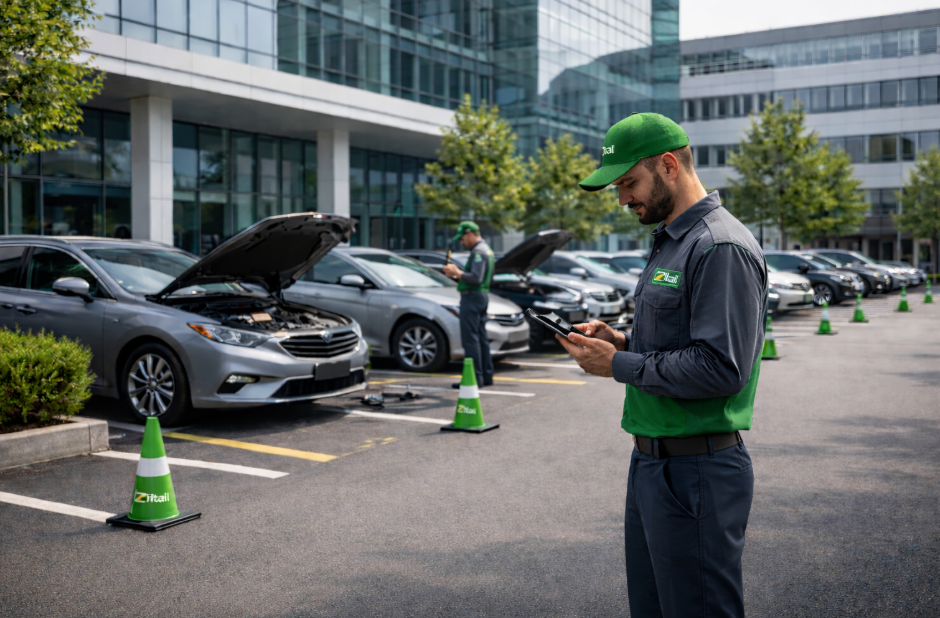
When vehicle care is coordinated and brought on-site:
- Travel is eliminated
- Scheduling becomes predictable
- Multiple services happen in one location
What was once fragmented becomes organized.
What once required effort becomes part of a routine.
Why Structure Changes Everything
Structure reduces variability.
Instead of each person managing maintenance independently, it becomes:
- Coordinated
- Visible
- Repeatable
This doesn’t just improve convenience.
It improves continuity.
Time is no longer broken into pieces.
Workflows remain intact.
The day holds its shape.
A System, Not a Service
This is where a different model begins to emerge.
Not another provider.
Not another appointment.
A system.
One that aligns digital coordination with physical service.
One that reduces effort instead of redistributing it.
One that treats vehicle care as part of daily infrastructure—not an exception to it.
Zitaii operates within this shift.
Not as a traditional service provider—but as a coordination layer that organizes how vehicle care happens across workplaces and shared environments.
The focus isn’t just access.
It’s structure.
The Outcome Is Immediate
When the process changes, the impact is clear.
Less movement.
Less disruption.
More consistency.
What was once an interruption becomes something almost unnoticeable—because it no longer competes with the day.
Final Thought
Vehicle maintenance doesn’t need to be optimized.
It needs to be restructured.
Because when structure is in place, friction disappears.
And when friction disappears, the value isn’t incremental.
It’s immediate.