Future of Work and Mobility
Friction Isn’t Just Inconvenient—It’s Expensive
It rarely arrives as a major disruption. Instead, it embeds itself in ordinary routines—in tasks that feel necessary, expected, even unavoidable.
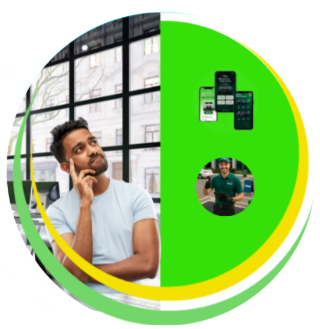
At 10:15 a.m., he steps out of the office for what should be a routine errand—an oil change scheduled neatly between meetings. It’s the kind of task that feels manageable, even efficient, when planned in advance. In and out. Back before lunch.
But by 10:40, he’s still in traffic.
Nothing unusual. A few lights, a slight delay, the kind of slow movement that doesn’t feel like a problem in the moment. By the time he arrives, just after 11:00, the waiting area is already full. “Shouldn’t be too long,” someone says. It’s a familiar phrase—comforting, but imprecise.
He opens his laptop, skims emails, tries to stay productive. But the environment isn’t built for focus. Time passes differently in places like this—stretched, fragmented, slightly out of sync with the rest of the day.
By 12:10, a meeting reminder appears on his phone. It’s easier to reschedule than to rush. Another adjustment. Another small shift.
At 12:45, the car is ready.
He’s back at his desk just after 1:15 p.m.
What was meant to take an hour has quietly expanded into three.
Nothing went wrong. That’s what makes it easy to ignore.
This is how friction works.
It rarely arrives as a major disruption. Instead, it embeds itself in ordinary routines—in tasks that feel necessary, expected, even unavoidable. A delayed errand. A longer-than-expected appointment. A momentary break in focus that extends far beyond the moment itself.
Individually, these instances don’t seem significant. But over time, they accumulate.
Across a single week, they take hours.
Across a team, they take days.
Across an organization, they become something far more substantial.
Not inconvenience.
Cost.
The challenge is that friction doesn’t show up where we typically look for it. It isn’t captured in dashboards or reflected in performance metrics. It lives in the margins—between meetings, outside of workflows, in the personal logistics that quietly interrupt professional time.
Vehicle maintenance is one of the most consistent examples. It’s predictable, recurring, and necessary. Yet the way it’s handled remains largely unchanged: the individual bears the burden—driving, waiting, adjusting, returning.
What appears to be a simple task carries a hidden structure of inefficiency.
And because it’s familiar, it’s rarely questioned.
But that’s beginning to change.
A quieter shift is emerging—one that rethinks not the service itself, but how and where it happens. Models that bring maintenance closer to where the day is already taking place. Systems that reduce movement instead of requiring it.
Some platforms, like Zitaii, are exploring this idea by coordinating vehicle care directly within workplaces and shared environments—removing the need for the trip entirely. The result isn’t just convenience, but continuity.
Because when friction is removed, the effect isn’t subtle.
Time returns to where it was intended.
Workflows remain intact.
The day holds its shape.
Friction has always been part of how things operate.
But that doesn’t mean it has to remain.
And as expectations evolve—around efficiency, experience, and time—the tolerance for unnecessary friction continues to shrink.
In the end, the realization is simple.
Friction isn’t just inconvenient.
It’s expensive.
And once it’s removed, the value doesn’t need to be created.
It’s already there—waiting to be reclaimed.