Technology and the Zitaii Platform
From Marketing Noise to Embedded Demand
Consumers are surrounded by marketing noise. Ads follow them across devices, platforms, and even physical spaces. Attention has become scarce, trust harder to earn, and differentiation increasingly difficult.
From Marketing Noise to Embedded Demand
For years, growth has been framed as a visibility problem. If a business wasn’t growing, the assumption was simple: not enough ads, not enough content, not enough reach. The solution was always to get louder.
Today, that approach is breaking down.
Consumers are surrounded by marketing noise. Ads follow them across devices, platforms, and even physical spaces. Attention has become scarce, trust harder to earn, and differentiation increasingly difficult. As a result, many businesses are spending more to achieve less—more impressions, more clicks, more effort, with little stability to show for it.
For mobile service providers, this pressure is especially acute. Marketing channels that once delivered steady leads now demand constant optimization, larger budgets, and familiarity with tools that weren’t designed for small, service-based operations. Growth becomes reactive instead of intentional.
This is where the shift begins.
Why Is Traditional Marketing Failing Mobile Service Providers?
Traditional marketing relies on visibility within oversaturated digital channels. Rising ad costs, algorithm-driven competition, and declining consumer trust make it increasingly difficult for mobile service providers to achieve predictable, long-term growth.
Instead of creating stability, marketing efforts often produce volatility—forcing providers to chase attention rather than build reliable demand.
Embedded demand represents a move away from fighting for attention and toward designing access. Instead of asking customers to find you, embedded demand places services directly where people already are. Growth no longer depends on persuasion or interruption, but on proximity, timing, and relevance.
The difference is subtle but profound.
What Is Embedded Demand?
Embedded demand is a growth model where services are integrated into everyday environments—such as workplaces, business parks, and community locations—so customers can access them without changing their routines or responding to advertising.
Rather than competing for clicks or impressions, embedded demand aligns services with real-world behavior.
Marketing noise competes for attention in crowded digital spaces. Embedded demand operates quietly in the background of everyday life. It doesn’t rely on algorithms, bidding wars, or endless content cycles. It works because it aligns with how people actually move through their day.
For mobile service providers, this shift changes the entire operating model. Vehicles already sit parked for hours at workplaces, business parks, coworking spaces, and community locations. These environments aren’t hypothetical demand pools—they’re real, recurring, and predictable.
How Does Embedded Demand Change the Growth Model?
When services are coordinated around fixed locations, demand becomes structured instead of sporadic. Providers know where they’ll be, how many vehicles they’ll service, and what resources are required before the day begins.
This reduces wasted time, improves utilization, and creates space to focus on service quality rather than constant customer acquisition.
Embedded demand also reshapes the customer relationship.
When services appear consistently in familiar places, trust builds naturally. Customers don’t feel sold to; they feel supported. Maintenance becomes easier to manage, less disruptive, and more likely to happen on time. Over time, this consistency creates repeat demand without repeated persuasion.
This is why the most resilient providers aren’t chasing the latest marketing trend. They’re stepping out of the noise entirely.
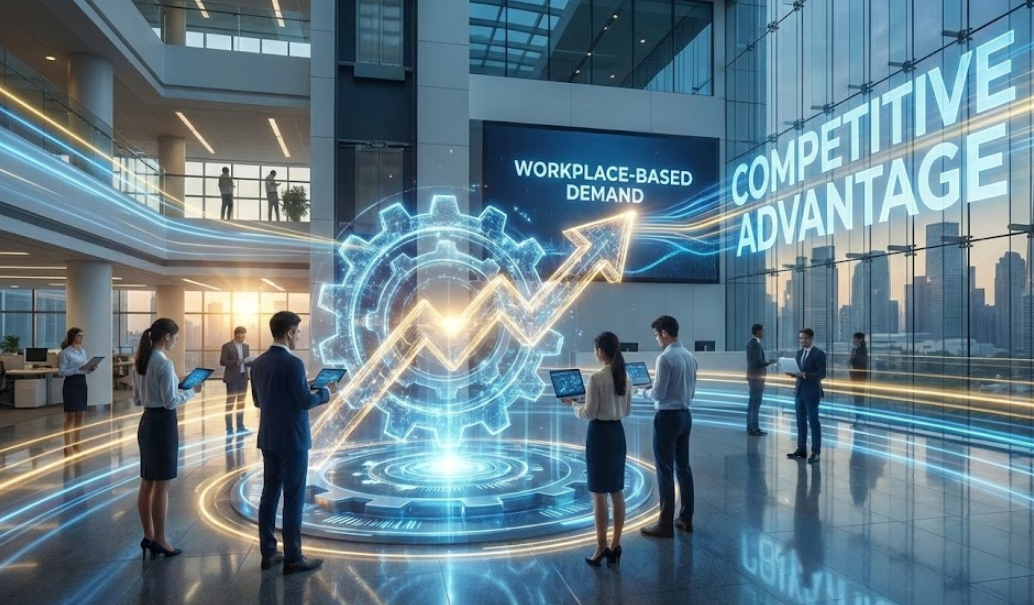
Why Workplace-Based Demand Creates an Advantage
Workplace-based service models allow mobile service providers to reduce acquisition costs, increase efficiency, and plan operations with greater confidence. Instead of competing for attention online, providers operate inside structured systems where demand is already approved, scheduled, and concentrated.
Growth becomes quieter—but more durable.
Embedded Demand in Local Markets
This shift toward embedded demand is already gaining traction in markets like Dallas–Fort Worth, Texas, where dense business districts, corporate campuses, and coworking spaces create natural hubs for onsite vehicle services. As cities grow and time becomes more constrained, workplace-based service models are emerging as a practical solution for both providers and drivers across Texas and similar metro areas.
Embedded demand doesn’t eliminate marketing—it reframes it. Growth becomes a byproduct of access, not attention. Stability comes from structure, not spend. And service quality becomes the primary differentiator again.
The future of growth for mobile service providers isn’t louder messaging or smarter automation. It’s quieter systems that work in the background, designed around real behavior, real schedules, and real needs.
Moving from marketing noise to embedded demand isn’t about doing more. It’s about doing something fundamentally different—building growth into the places where it naturally belongs. And once that shift happens, the noise fades on its own.