Vendor Stories and Mobile Service Innovation
Part 2: Why Marketing Stops Scaling Mobile Service And What Replaces It in 2026
More leads often mean wider routes, longer drive times, and inconsistent daily schedules. Technicians spend more time traveling than servicing. Operational costs rise faster than revenue.
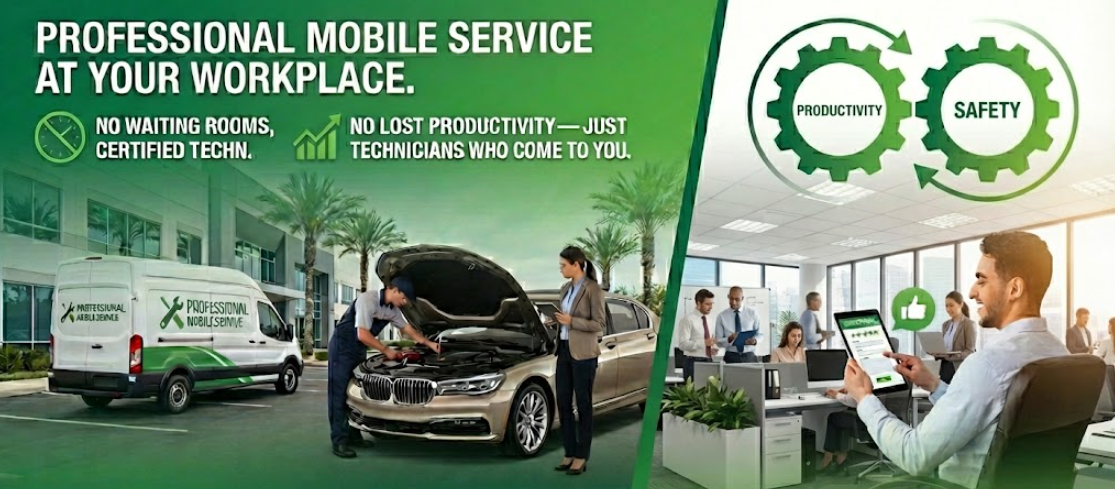
Part 2: Why Marketing Stops Scaling Mobile Service
And What Replaces It in 2026
For years, growth in mobile automotive service followed a familiar playbook.
Run ads.
Expand coverage.
Take every job that comes in.
It worked when competition was light and attention was cheap. In 2026, that model is reaching its limit, especially for mobile service providers operating across Texas and the Dallas–Fort Worth metroplex.
Marketing no longer scales service. It fragments it.
The Problem With Marketing-Led Growth
Marketing generates interest, not efficiency.
More leads often mean wider routes, longer drive times, and inconsistent daily schedules. Technicians spend more time traveling than servicing. Operational costs rise faster than revenue.
As ad platforms become noisier and more expensive, providers are paying more just to maintain the same booking volume.
Growth begins to feel busy instead of profitable.
Why Demand Quality Matters More Than Lead Volume
Not all bookings are equal.
A single service call thirty miles away carries hidden costs. Fuel. Time. Fatigue. Missed opportunities elsewhere.
High-quality demand shows up differently. It is concentrated. It is predictable. It repeats.
In dense regions like DFW, where traffic and distance quietly eat margins, how demand arrives matters more than how many leads you generate.
The Shift From Marketing to Embedded Demand
The most effective mobile service growth in 2026 is not driven by advertising.
It is driven by embedded demand.
Demand that exists inside workplaces, coworking spaces, and business parks. Places where vehicles are already parked. Where time is already allocated. Where trust is shared socially.
When service is embedded into these environments, customers do not need to be convinced. They simply participate.
Why Embedded Demand Scales When Marketing Does Not
Embedded demand removes friction from both sides of the transaction.
Providers gain:
- Clustered service volume at a single location
- Predictable schedules
- Higher technician utilization
- Lower customer acquisition costs
Customers gain:
- Zero disruption to their workday
- Familiar service presence
- Confidence through repetition
Growth becomes operational instead of promotional.
What This Means for Mobile Service Providers in Texas
Texas is uniquely positioned for this shift.
Large employment hubs.
Expansive business parks.
High commuter dependency.
Mobile service providers who rely solely on marketing will continue to feel pressure. Those who integrate into where people already work will see steadier volume with less effort.
This is not about replacing your brand or customer relationships. It is about placing them in the right environment to grow.
How Zitaii Fits Into the New Growth Model
Zitaii was built around this exact transition.
Instead of helping providers advertise more, Zitaii helps them operate smarter by aggregating demand at workplaces and shared locations.
Service days are pre-scheduled. Vehicles are clustered. Customers return naturally.
Marketing becomes optional. Operations become the growth engine.
The Providers Who Win in 2026
The mobile service providers who win next year will not be the loudest.
They will be the most efficient.
The most predictable.
The most embedded into real life.
Marketing will still exist. It just will not be the foundation anymore.
Coming Up in Part 3
In Part 3, we will explore how predictable volume changes technician retention, burnout, and service quality, and why operational stability is becoming a competitive advantage.