Workplace Wellness and Productivity
The Hidden Productivity Drain Leaders Rarely Measure
vehicle maintenance. Not because it happens every day — but because when it does, it interrupts everything.
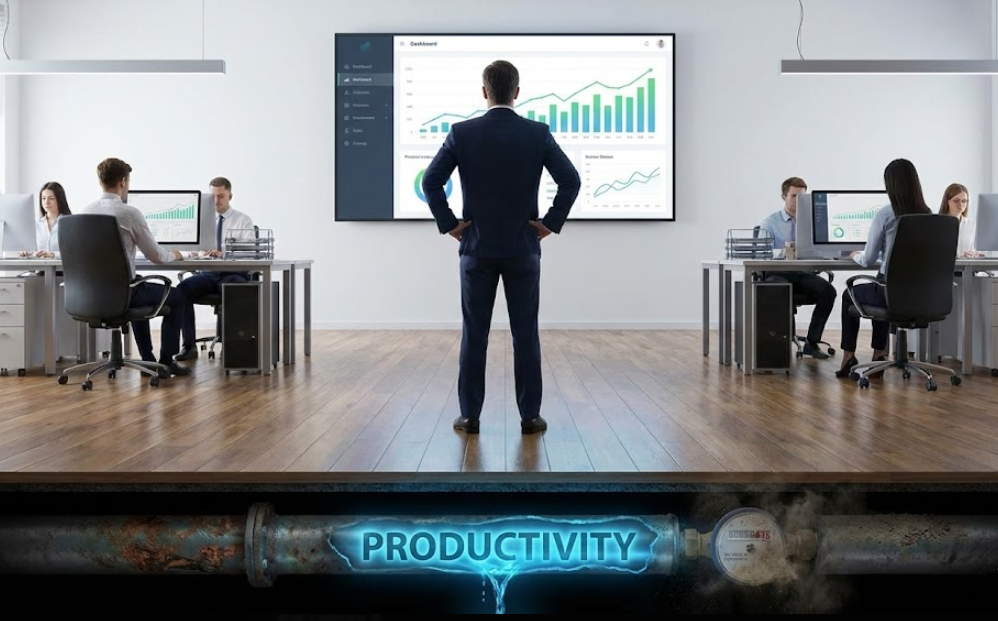
The Hidden Productivity Drain Leaders Rarely Measure
When organizations talk about lost productivity, the conversation usually centers on meetings, technology friction, or burnout. But there’s another source of disruption that quietly pulls people away from work — and rarely shows up on a dashboard:
vehicle maintenance.
Not because it happens every day — but because when it does, it interrupts everything.
Unlike many workplace distractions, car maintenance doesn’t fragment attention in small increments. It removes employees from the workday entirely. People leave early. Arrive late. Miss meetings. Take PTO for errands that should be routine. Or worse, deal with unexpected breakdowns that create cascading delays.
The impact isn’t just time lost — it’s momentum lost.
Why Does Vehicle Maintenance Affect Employee Productivity?
Vehicle maintenance affects productivity because it disrupts work schedules, increases stress, and removes employees from core work hours. When maintenance is unpredictable or inconvenient, it leads to absenteeism, reduced focus, and delayed workflows.
Why Transportation Friction Hits Productivity So Hard
Research from workplace organizations such as SHRM consistently highlights how commuting stress, travel disruptions, and personal logistics impact employee performance, engagement, and retention. While vehicle maintenance is not always listed as a standalone category, it sits at the intersection of all three:
- Commuting stress increases when vehicles feel unreliable
- Workday interruptions occur when maintenance can’t be scheduled predictably
- Mental load rises when employees worry about safety, cost, or breakdowns
In regions like Dallas–Fort Worth, where driving is essential and commutes are long, these effects are amplified. A single “quick oil change” can easily turn into a two-to-four-hour disruption. Multiply that across teams, and the productivity impact becomes material — even if it’s never formally tracked.
This is why vehicle maintenance often shows up indirectly in productivity data, bundled into absenteeism, late arrivals, stress, and disengagement.
It’s Not the Task — It’s the Friction
The issue isn’t that employees need car maintenance.
It’s how they’re forced to get it.
Traditional car care often requires employees to:
- Leave work during core hours
- Rearrange meetings or shift coverage
- Sit in waiting rooms
- Coordinate childcare or rides
- Absorb unpredictable costs
Each step adds friction. And friction is the enemy of productivity.
When maintenance is inconvenient, employees delay it. When they delay it, risk increases. And when something finally goes wrong, the disruption is far greater than the original service would have been.
Why Proactive Vehicle Care Is a Productivity Strategy
From a business perspective, proactive vehicle care isn’t an employee perk — it’s a preventative operational strategy.
When vehicle care is accessible and predictable:
- Fewer unexpected absences occur
- Less PTO is used for basic errands
- Commutes are safer and more reliable
- Employees arrive more focused and less stressed
The result isn’t just time saved — it’s continuity preserved.
Teams stay intact. Schedules hold. Workflows aren’t disrupted by avoidable logistics.
What Is Workplace Vehicle Care?
Workplace vehicle care is the practice of providing onsite or workplace-based vehicle maintenance so employees can service their cars without leaving work or disrupting their schedules.
Making the Invisible Visible for Texas Employers
Vehicle maintenance rarely appears as a line item in productivity reports, but its effects are felt every day — especially in car-dependent regions like North Texas.
Forward-thinking employers across Dallas–Fort Worth aren’t trying to add more tools or benefits. They’re removing what slows people down.
By addressing transportation friction proactively, organizations reduce one of the most overlooked sources of lost productivity — while supporting employee safety, wellbeing, and performance.
Sometimes the fastest way forward isn’t adding another system.
It’s removing the obstacle everyone has been working around.
Ready to reduce everyday productivity loss without adding operational burden?
Discover how proactive, workplace-based vehicle care helps DFW teams stay focused, confident, and on the road — without disrupting the workday.
👉 Explore workplace vehicle care with Zitaii
#WorkplaceVehicleCare
#EmployeeWellbeing
#DFWBusiness